The Gate
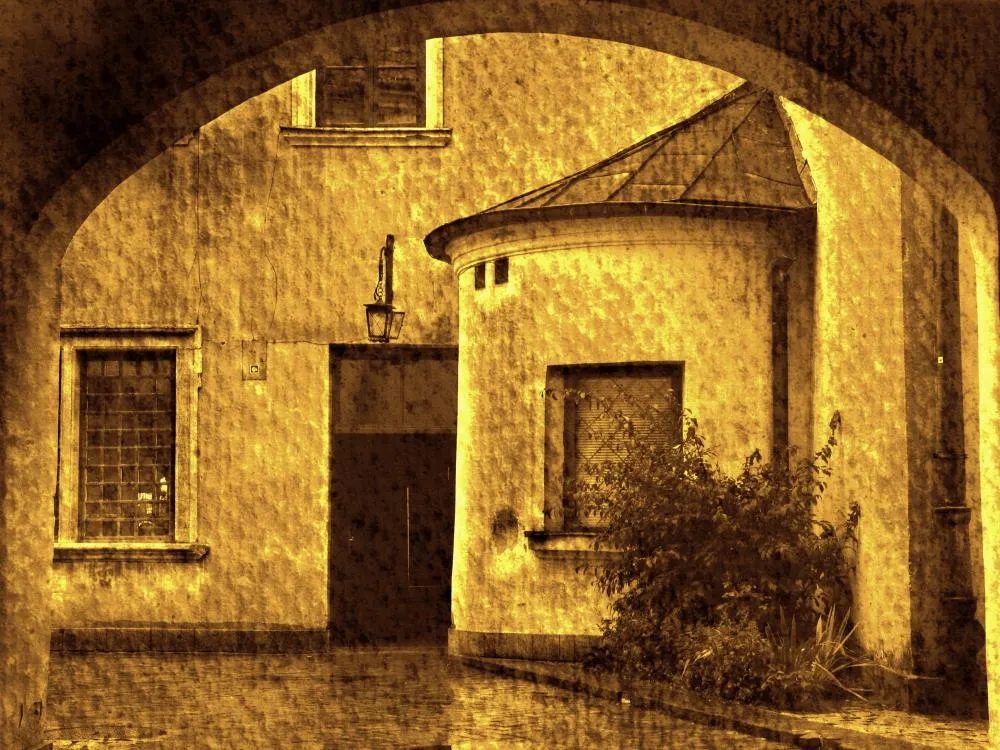 Zamość, aut.MISBetley, CC-BY-NC
Gum bichromate is a 19th-century photographic printing process that uses a mixture of gum arabic, a dichromate sensitizer, and a pigment.
Since the emulsion is applied by hand onto paper, artists can create unique, painterly effects by layering different colors and textures.
The image is developed in plain water, where the unexposed areas wash away while the light-hardened parts remain to form the final print.
Gum bichromate (pl. guma dwuchromianowa)